This is a sponsored story, one of our paid services. We maintain full editorial independence. Read more here.
Tellason Stock: American-Made Raw Denim Jackets Under $200
Raw denim jackets made in San Francisco for less than $200 aren’t exactly common. Tellason has two of them: the Stock Denim Jacket at $195 and the Stock Coverall at $189.
The selvedge counterparts start at $285, yet the Stock versions are made in the same city, at the same factory, using the same patterns and sewing techniques. The difference is all in the denim.
This article looks at why Tellason created Stock in the first place, how the non-selvedge fabric changes the economics, what actually changes in the finished jacket, and why that might make Stock the better buy for some readers.
Why Tellason Stock Exists
Tellason launched Stock in 2017 for two reasons:
The first was to make a smaller, more accessible range for guys who were new to raw denim, didn’t care all much about exactly how the fabric was made, or simply could not justify selvedge pricing.
The second was more specific: Pete Searson and Tony Patella wanted to buy more fabric from Cone Mills White Oak and send more business through the mill.

The obvious way to cut costs would have been to change where the garments were made. Tony says that option never entered the discussion. Tellason wanted to support the San Francisco factory that had made its jeans since day one just as deliberately as it wanted to support Cone.
So the thing they changed was the denim.
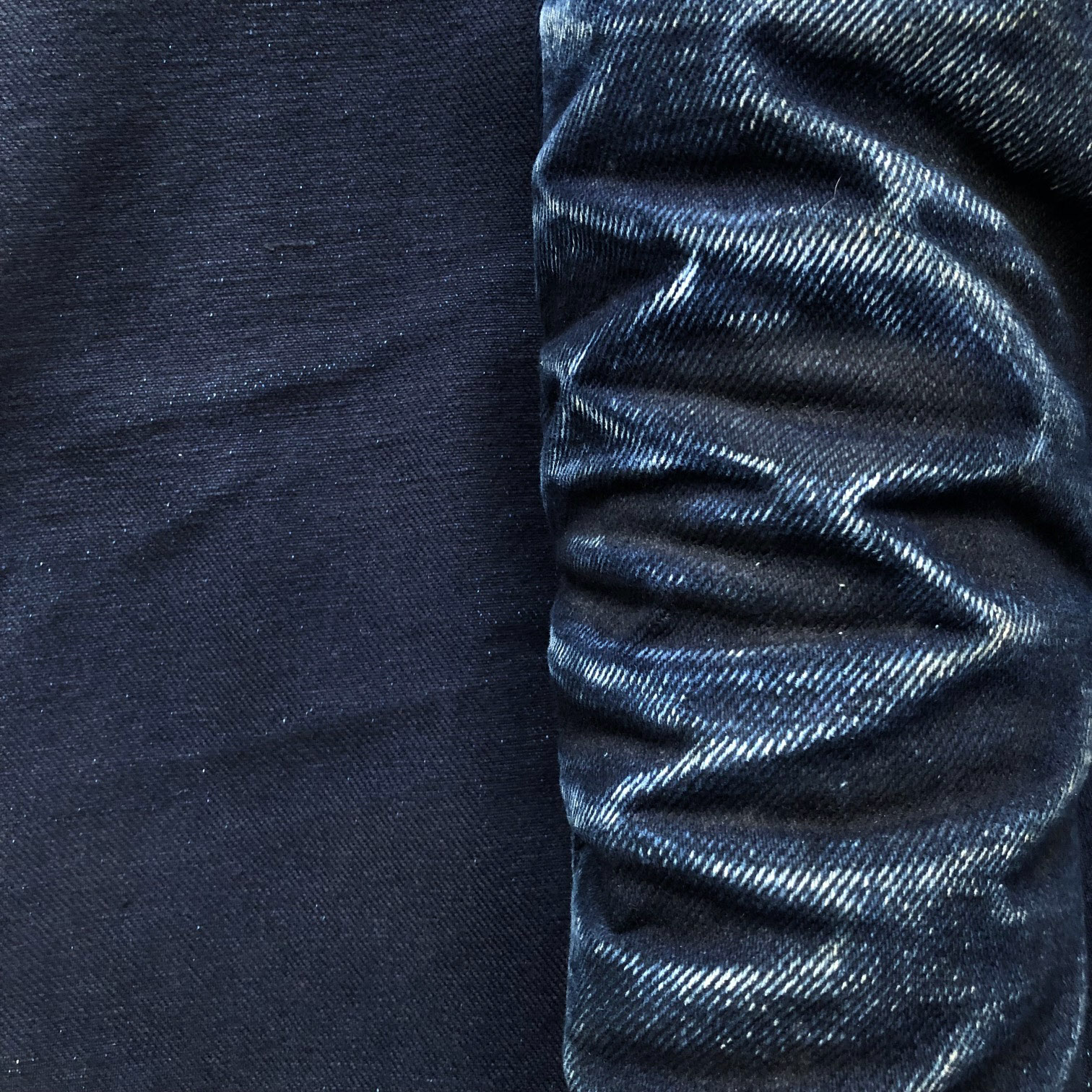
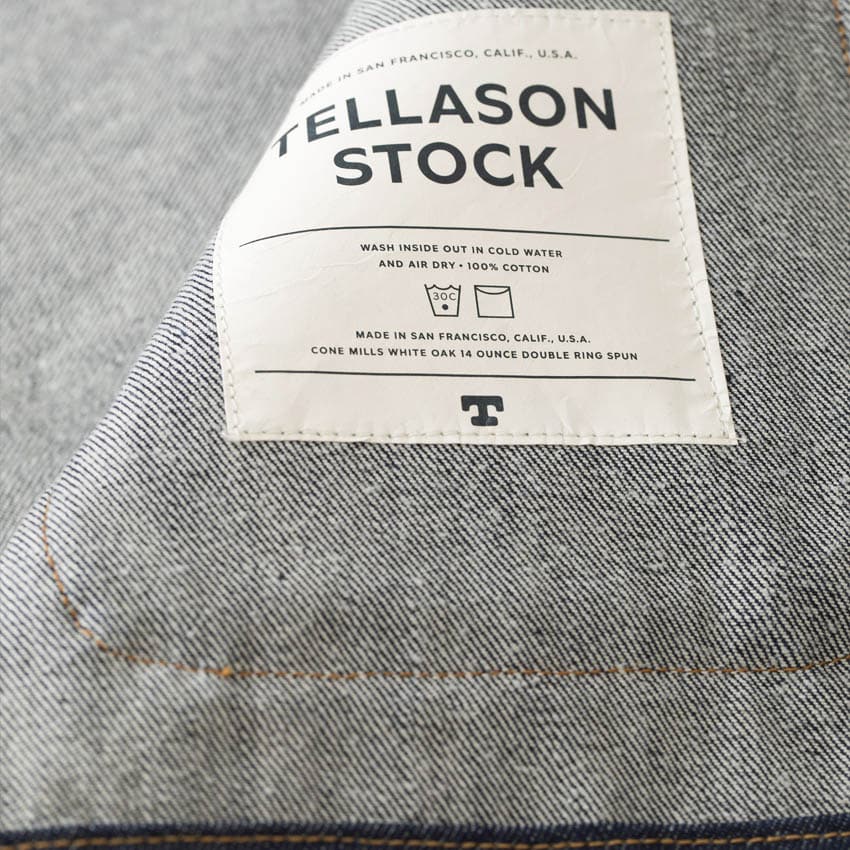
Instead of the narrow shuttle-loomed selvedge used in the main line, Stock used 14 oz. non-selvedge Cone denim woven on modern looms. The range stayed deliberately tight: two jean fits and two jackets.
Selvedge vs. Non-Selvedge
Selvedge denim is woven on narrow shuttle looms. As the shuttle carries the weft yarn back and forth, the fabric forms a self-finished edge. That edge is where the name comes from.
Modern denim looms work differently. They weave much wider rolls and produce fabric faster, but without that self-finished edge.
That difference matters commercially because fabric width and weaving speed both affect cost. It does not, by itself, tell you whether the denim is good.
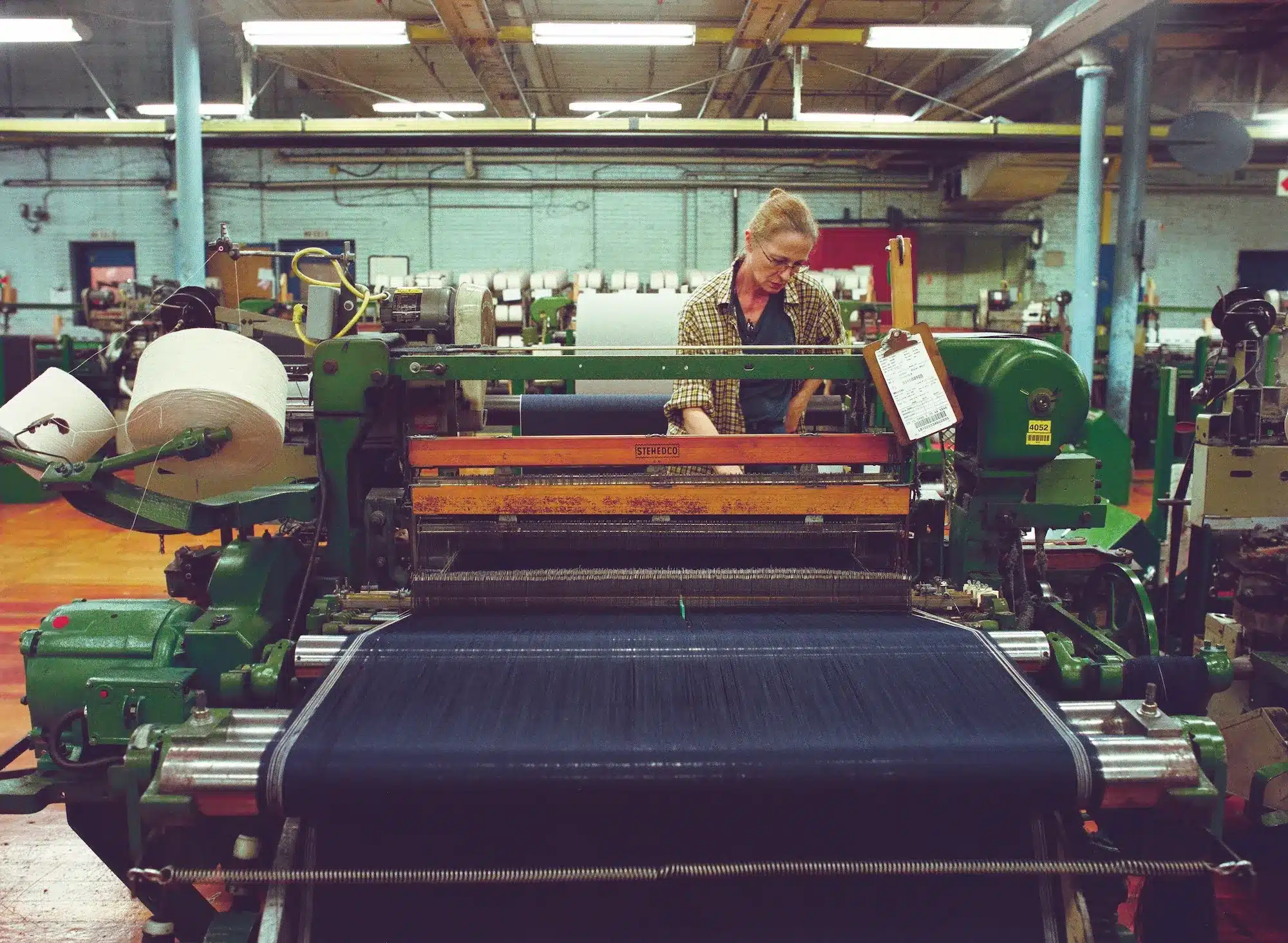
Tellason is a particularly useful example because both fabrics are substantial raw denims woven from double ring-spun yarns. The current Stock denim is still a 14 oz. Cone fabric, now woven at Cone’s plant in Mexico. Tony says the model number and recipe remained the same when production moved away from White Oak, and he actually prefers the current Mexican version.
The current Stock fabric has a 65-inch cuttable width. According to Tony, the yield is more than twice as efficient as cutting the same styles from Tellason’s narrower selvedge denim.
That explains a lot of the price gap. The Stock Denim Jacket is $195 versus $298 for the 14.75 oz. Kaihara version. The Stock Coverall is $189 compared to $285 in the comparable selvedge denim.
Tony says all of that difference comes from the denim. The cut-and-sew price is the same.
What Actually Changes in the Jacket
The difference between the mainline and Stock is actually less than the price gap might suggest.
Tony confirms that the Stock jackets use the same fits and sewing techniques as their selvedge counterparts. The differences beyond the denim are in the packaging, thread colour and hardware colour.
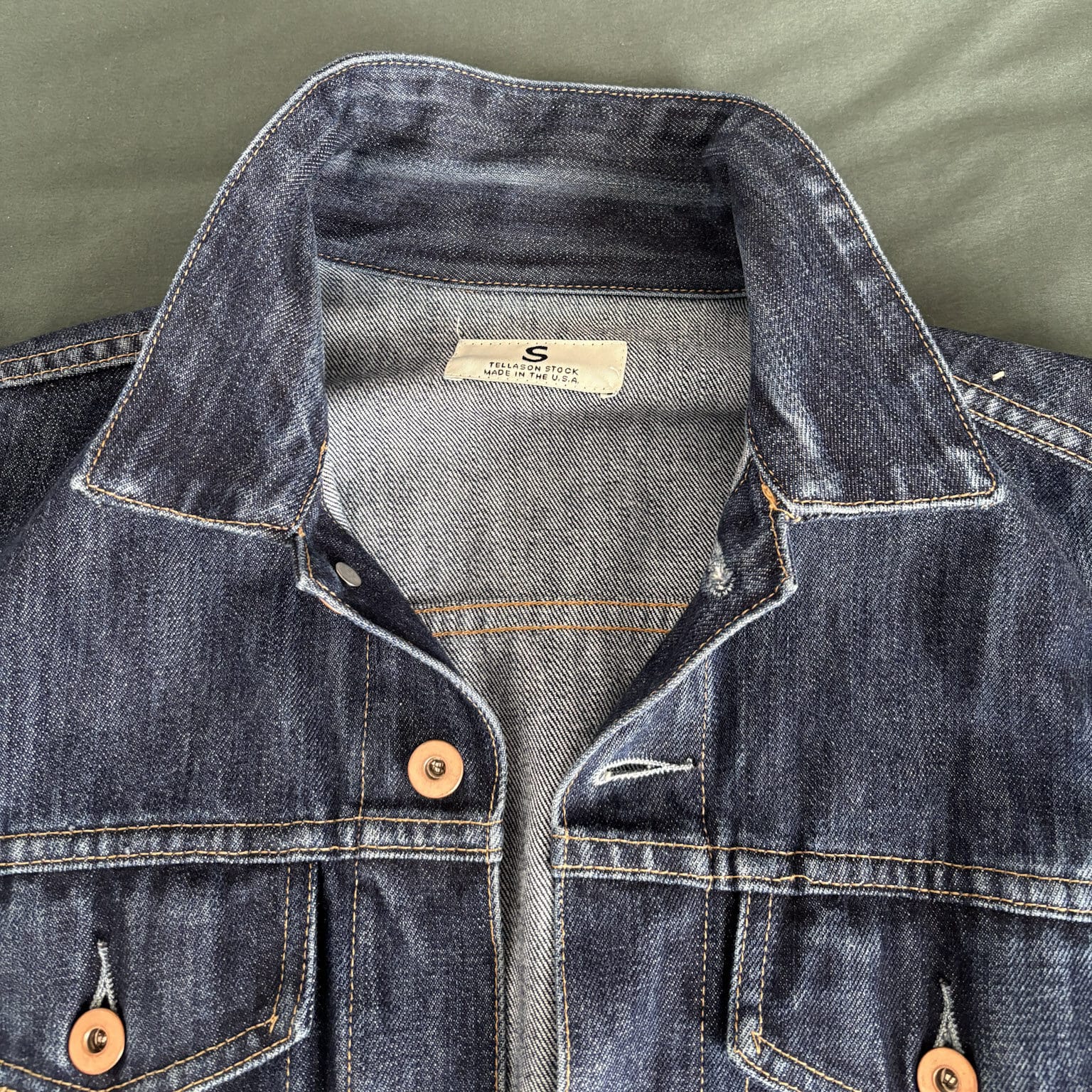
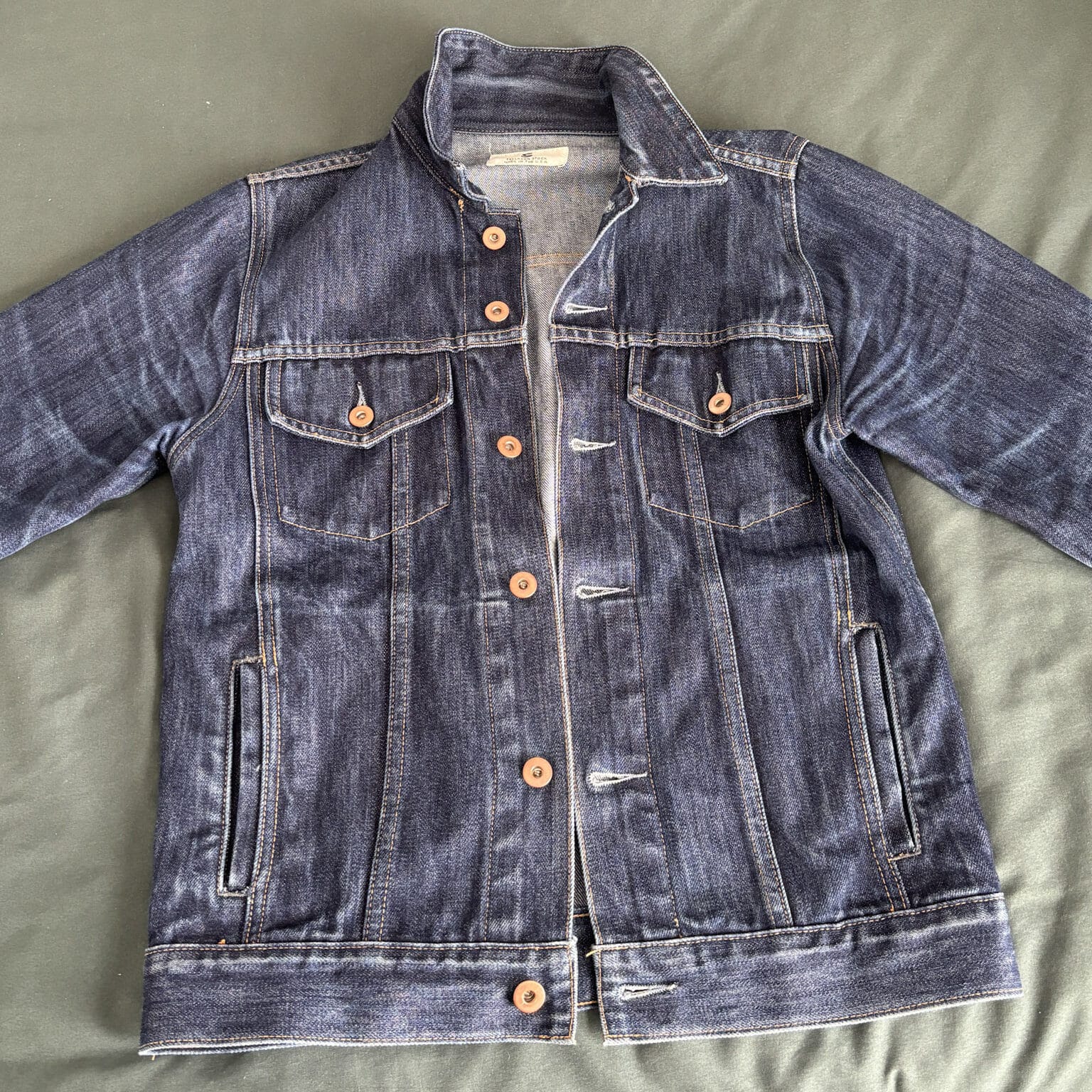
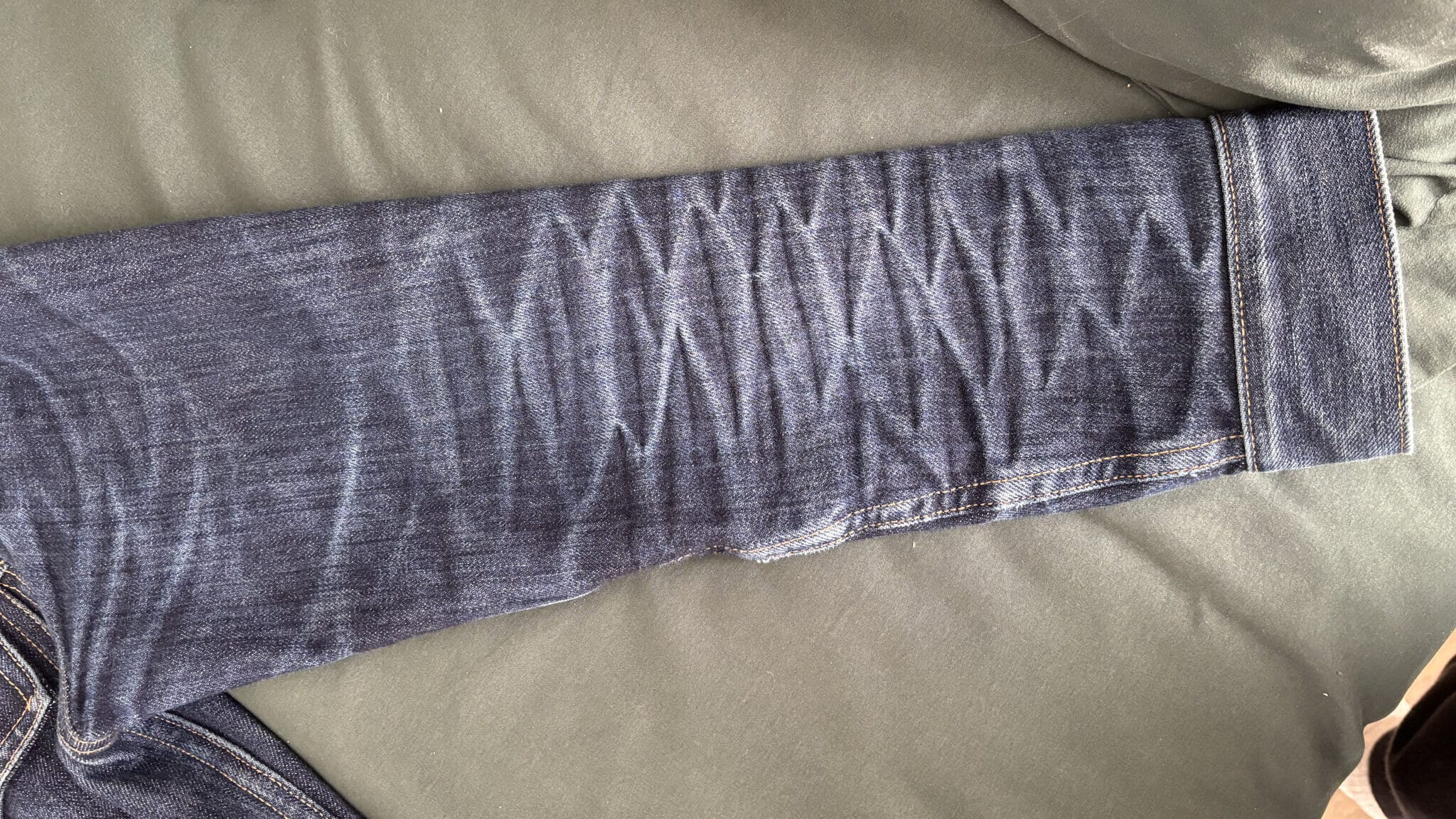
The Stock fabric does feel different. Tony describes it as less rigid than Tellason’s 14.75 oz. and 16.5 oz. Kaihara selvedges, with a hand closer to the 12.5 oz. denim. It breaks in more easily, but still develops strong fades with wear.
That distinction matters because non-selvedge is not a quality category. Most mass-market jeans are made from non-selvedge denim, but that does not mean every non-selvedge fabric belongs in the same bucket.
I like selvedge. I have spent nearly two decades selling it, writing about it, and wearing it. But the edge itself has never been the thing that makes a pair of jeans or a jacket good. Yarn, weave, dyeing, finishing, cut and sewing all matter too.
Two Jackets (and Two Jeans), Same Logic
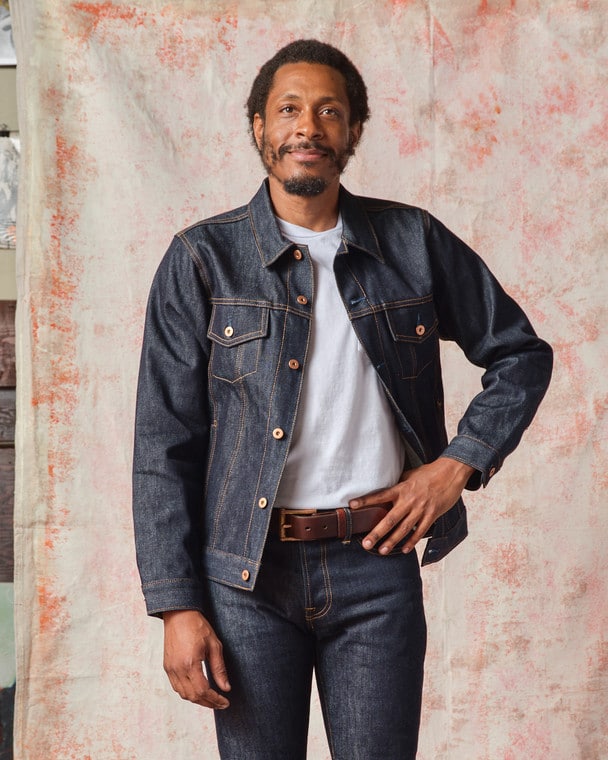
The Stock Denim Jacket
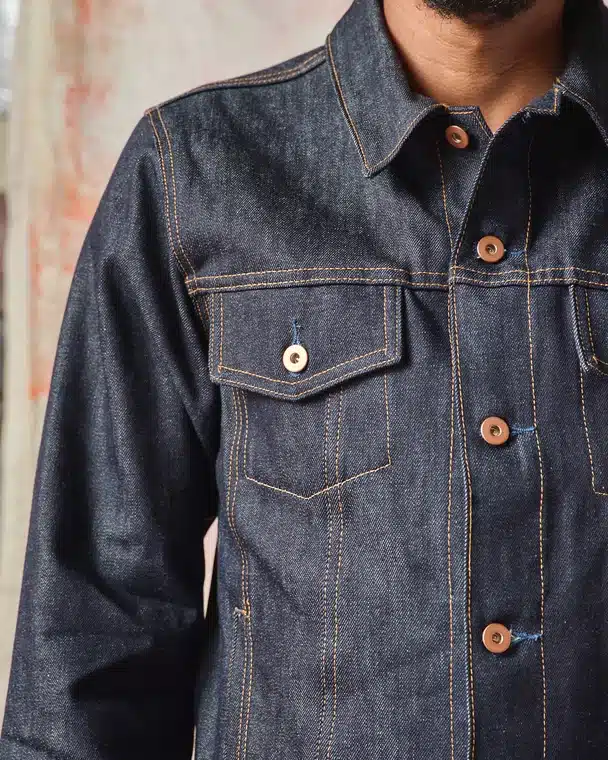
This is Tellason’s Type III-derived trucker shape, with the familiar chest flap pockets plus side hand-warmer pockets and two large interior pockets.
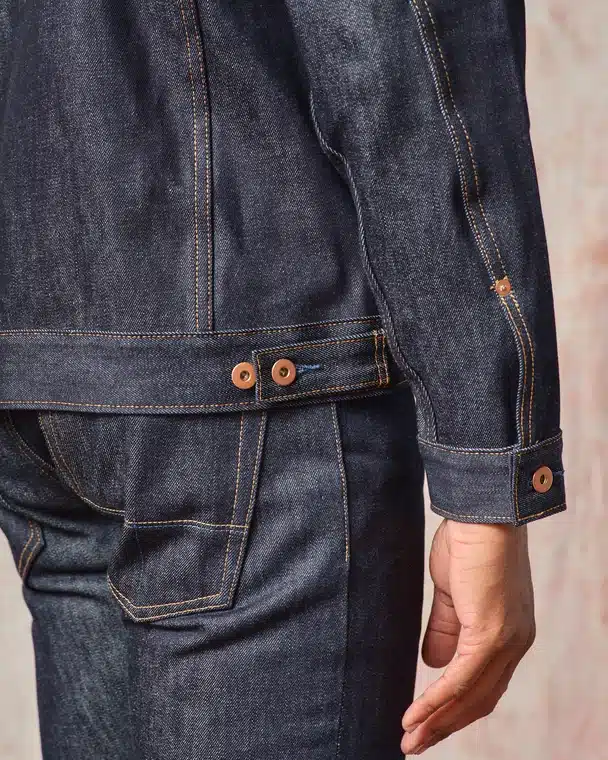
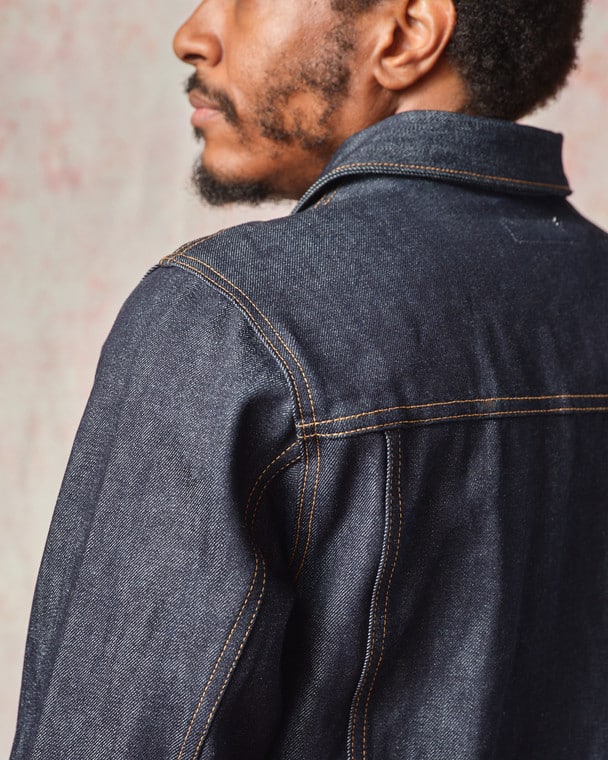
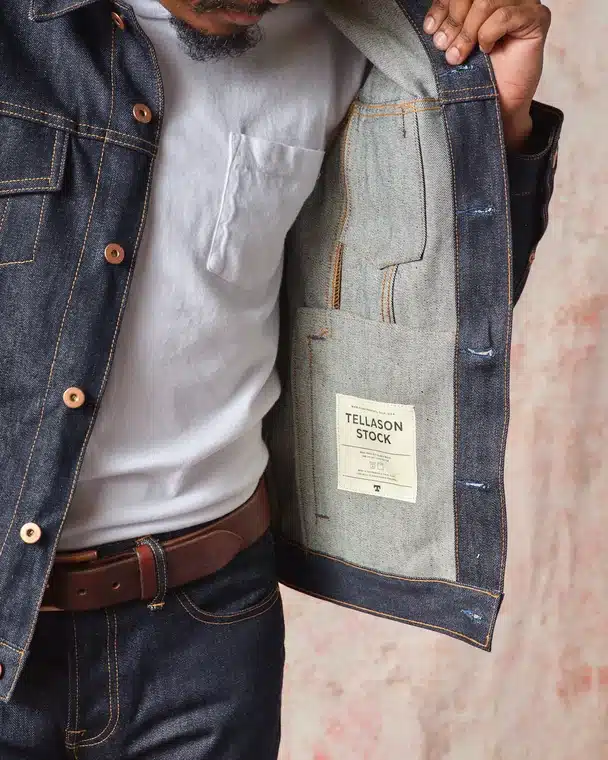
At $195, it gives you the same San Francisco-made pattern and sewing approach as the $298 14.75 oz. selvedge version, but in the easier-breaking 14 oz. Cone denim.
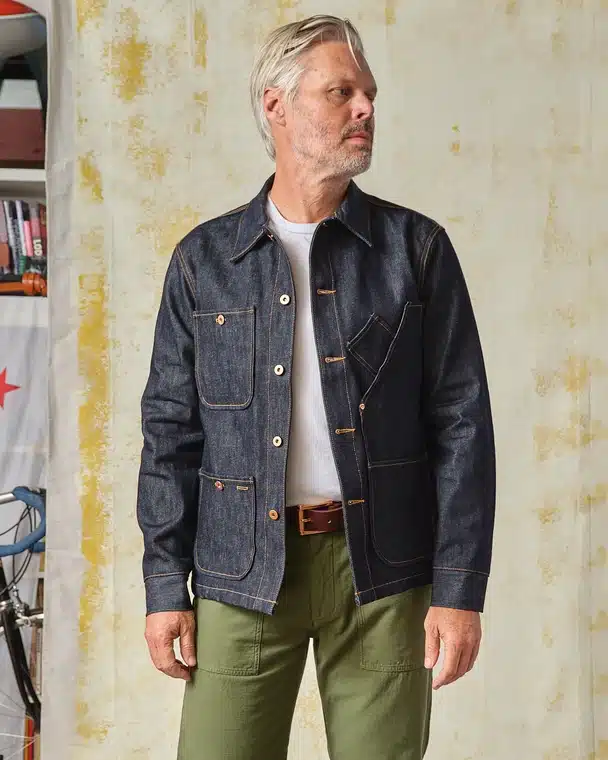
The Stock Coverall
The Coverall is the more distinctly Tellason option. Its roots go back to a 2011 collaboration with Jay Alaimo and the Brooklyn shop Smith & Butler, built around a chore-coat silhouette and an unusually useful pocket layout.
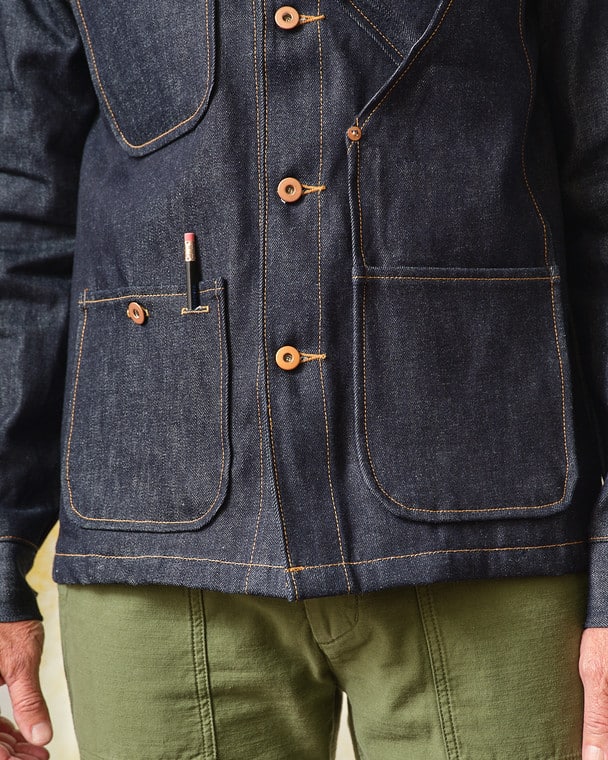
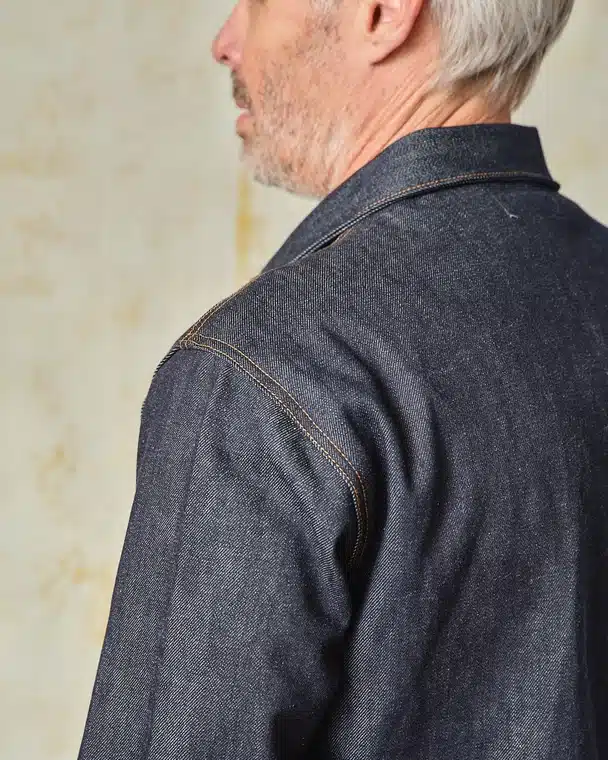
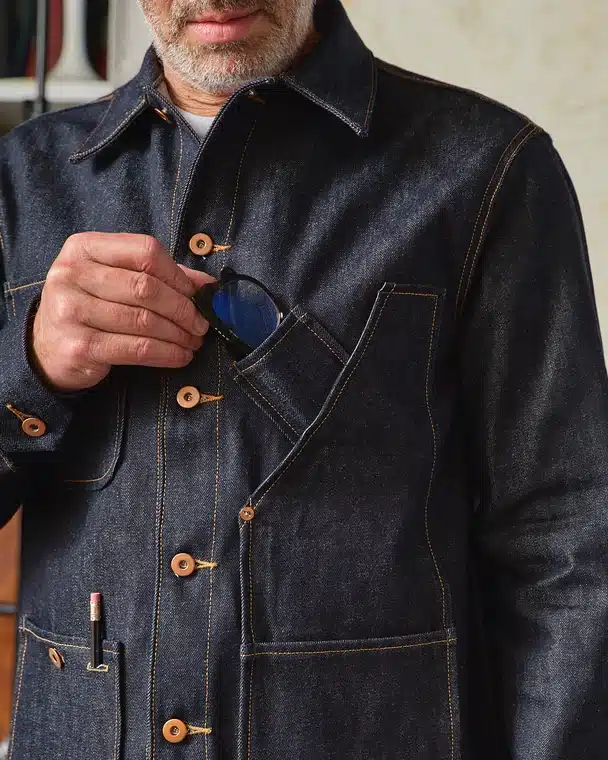
That includes multiple exterior utility pockets, a small interior pocket and the deep front pocket that has become one of the design’s signatures.
The Stock version costs $189. The comparable 14.75 oz. selvedge Coverall is $285. Again, the pattern and sewing logic stay the same while the denim changes.
You Can Get Stock Jeans Too
Stock isn’t just a jacket story. The range also includes two jeans—the Straight Leg and Slim Tapered—built around the same 14 oz. Cone denim and the same basic proposition: raw denim, San Francisco cut-and-sew and a lower fabric cost than the selvedge line.
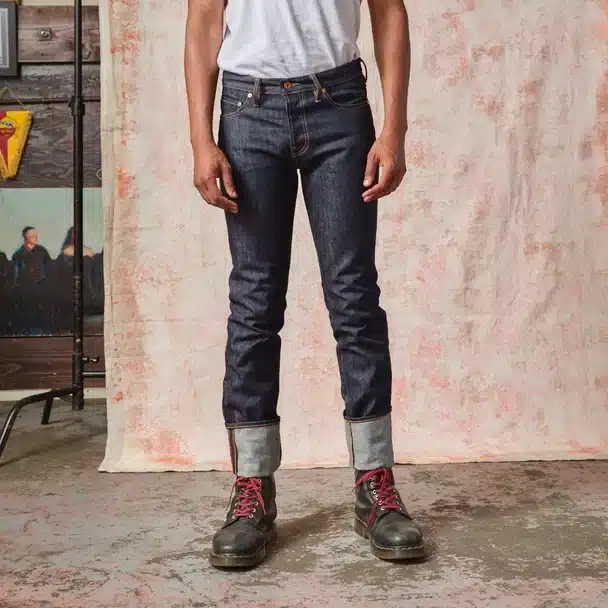
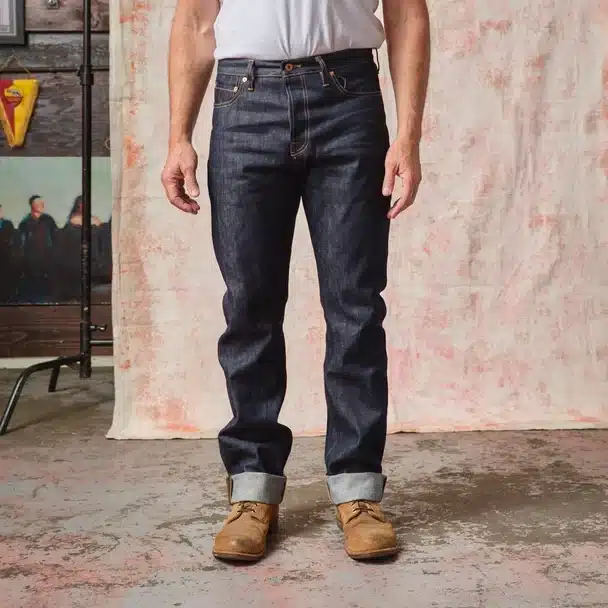
That matters because it shows Stock is not a one-off outerwear experiment. It is a deliberately small system: two jean fits, two jackets, one fabric choice doing a very specific job.
What Are You Paying For?
Tellason Stock makes the selvedge question unusually easy to isolate.
You are not paying less because the jackets are sewn somewhere else. You are not getting a simplified pattern. According to Tony, the production cost of cutting and sewing is unchanged.
You are paying less because wider modern-loom denim is cheaper for Tellason to buy and more efficient to cut.
That does not make selvedge pointless. The Kaihara fabrics bring their own feel, structure, fading characteristics and the narrow shuttle-loom construction that many of us genuinely enjoy. But Tellason Stock shows why those things should be separated from the basic question of whether a denim jacket is well made.
Tony sees Stock as a gateway into raw denim for plenty of customers. Some eventually move into Tellason’s selvedge range. Others simply want a well-constructed American-made jacket and stick with Stock.
Both routes make sense. The useful question is not whether selvedge is automatically better. It is whether the fabric, fit, construction and price line up with what you actually want from the jacket.
Each week, Tellason picks one product for its Item of the Week, with 20% off for seven days. Sign up to get the next one in your inbox.
Share